A new hope in Hattiesburg

Kennesaw State and Tulsa. 

In college football, those are two schools that you do not want to be mentioned in the same sentence as. They were Southern Miss’s neighbors on ESPN’s end of season FPI rankings in 2024. USM was ranked 132nd out of 134 eligible teams.

In the span of five years, Southern Miss has gone from being a respectable G5 college football program to a laughingstock. After fielding only seven teams with losing records in a 40+ year span from 1978 to 2019, the Golden Eagles have had just one winning season since 2020.  

Enter Charles Huff.  

Huff, a former walk on O-Lineman at Hampton university turned big time head coach, is no stranger to adversity. He is taking over as USM’s head coach fresh off coaching Sun Belt rival Marshall to a blowout conference championship victory. He reportedly left Marshall after the two sides could not agree on a contract extension.  

Outside of coaching the Thundering Herd to a 32-20 record in four seasons, he brings an impressive recruiting resume to the table. While coaching at Alabama, 247 Sports dubbed Huff the nations top recruiter prior to the 2020 season. Heard of Saquan Barkley? Huff was a huge reason why #26 spent his college years in Happy Valley. 

Huff’s “aura” as a recruiter has already helped bolster Southern Miss’s roster on paper – 2024 Sun Belt newcomer of the year QB Braylon Braxton decided to follow Huff from Huntington to Hattiesburg, along with 18 of his teammates. According to 247 Sports, USM has the #2 recruiting class in the Sun Belt (including transfers). 

Recruiting is not everything, though. USM had the #2 ranked recruiting class in the Sun Belt in 2024 but finished the season with only one win to show for it. That’s where Huff’s presence will make a difference.

Football teams, more than any other sport, need good coaching for success. As a kid I watched Al Golden take a true cellar dweller in my Temple Owls and turn them into winners. 

I have suffered through 5 seasons of bad coaching as a Temple fan and know what the program, or any program is capable of under competent leadership. 

But like Charles Huff stated in his press conference, he’s only a small piece of this rebuild. Moving out of a house where Tulsa and Kennesaw State are your neighbors is going to take an all in effort from all of the staff, the community, and the especially the administration, as CFB transitions into an unprecedented time with payers being paid directly and the transfer portal leaving no team unscathed. 

But if there’s anyone who can right the ship in Hattiesburg, it’s Charles Huff. Expect a bounce back year from the Golden Eagles in 2025.

What the new CFP format means for the Group of 5

Recently it was announced that the College Football Playoff would be shifting its format yet again. The CFP Management Committee clearly did not read my article on what the best version would look like, so they went ahead and proposed their own format.  

The new format, which is effective this upcoming season, will still feature twelve teams. Although the top five conference winners will still get automatic bids, the teams will be seeded as they’re ranked in the final CFP rankings. If the format was effective last season, the byes awarded to Boise St. and Arizona St. would have instead been given to Penn St. and Texas. 

From the CFP Management Committee’s perspective, this move makes a ton of sense. They gave in to the pressure of their financial backbone to reward the higher overall seeded teams with byes. Despite rumors of another expansion of the field to sixteen teams in 2026, this tweak is a bad sign for G5 CFB hopefuls in the long run. 

As a part of the College Football Playoff new TV contract made with ESPN in 2024, the “Power two” (Big Ten and SEC) will combine to earn about 58% of the CFP’s base distribution. This comes out to an annual payout increase of up to $16-17m per school compared to the previous contract.  

The ACC and Big XII will get 17.1% and 14.7% respectively, while Notre Dame and all 64 G5 teams will get the remaining 10%. Despite the total dollar G5 teams will be receiving in the new deal being slightly higher, it’s drops in the bucket compared to the increase of college football’s titans. Under the previous contract, G5 schools received almost 20% of the base distribution in the previous structure. 

Although G5 teams cannot be pushed out completely from the CFB deal, I think the SEC and Big Ten will threaten to secede from the CFB to start their own playoff and/or use their leverage to dwindle the G5’s revenue share. 

If and when that happens, what options do G5 programs have?

Leaving the CFP voluntarily would be a huge mistake – they would be losing their financial lifeline. What they could do instead is create their own playoff, akin to college basketball’s NIT, while still being tethered to the “main” CFP. This would create buzz around G5 teams and make bowl season more interesting.  

There aren’t too many G5 fanboys like myself, in fact I don’t know any others personally. 

But people love betting on football games, and statistics show more bets are placed during bowl season when there aren’t as many games on. A potential G5 playoff could present conferences and schools with opportunities to broaden their revenue stream by forming advertising and sponsorship partnerships with sportsbooks. The idea has also already been brought up amongst G5 commissioners.

An end of season tournament may also inspire more players to not opt out of their team’s bowl games, although for a knock-off tournament there’s no guarantee. 

As far as how the tournament could look, I think an eight team, straight seeded bracket would fit best. Every non-CFP qualifying conference tournament winner would earn a berth, with the next four teams being selected at-large by a committee. If this tournament was in place for the 2024 season, it would have featured Ohio, Marshall, UNLV, Army, etc.  

G5 teams will never get the attention that power conference schools do, but a post season tournament between them would draw excitement and open doors for diversified revenue streams for mid-majors in this unpredictable era of college football.

NIU’s move to the Mountain West is the wrong one – here’s why

NIU players pose for a picture after defeating #5 Notre Dame in September 2024

In early 2025, the news of Northern Illinois’ departure from the MAC sent shockwaves through the group of five universe. The MAC has been the rocky outcrop in the Drake passage of today’s college football realignment era, as it is one of the only conferences that has retained all its core members. NIU has won the MAC championship 5 of the last 15 years, and clearly the decision makers in Dekalb see a bright future ahead for the Huskies – one which doesn’t involve the MAC. 

The Director of Athletics at NIU, Sean Frazier, said that the move was influenced by USC and UCLA deciding to leave the Pac-12 Conference for the Big Ten in 2022. Frazier said “There’s no such thing as standing still” when talking about today’s college football environment. He’s got a point, but Northern Illinois is not UCLA or USC. Although NIU wants to weather the NIL/Transfer portal/Super conference storm with this move, they have just left their mountain hut bolted to the top of Mount Washington (the MAC) and have ventured out into windchills a hundred below zero wearing only ankle socks.

NIU’s administration wants to reach the college football playoff just like every other program. They believe that joining the Mountain West, who this past season produced a college football playoff team in Boise State, will help them reach their goal. But the Mountain West is losing five of its most competitive members – of the five teams leaving the conference in 2026, four of them have won the conference championship within the past decade. 

Boise State is also an anomaly when speaking about the MWC’s success and should not be used as a measuring stick for other programs. Of the 2 appearances made in NY6 bowls by MWC schools since the end of the BCS era (post 2013), Boise State accounts for both.

Supporters of this decision argue that even though the MWC will lose some of its key members before NIU joins, it has always cultivated a tradition of success, and that bodes well for the Huskies’ future. Programs like TCU, Utah, and BYU used the conference as a stepping stone to the P5. While it is true that those programs saw success as members of the MWC, the common denominator between them all is that they were all historically strong programs that established themselves (for the most part) while they were a part of the ill-fated WAC. In fact, almost every member of the current MWC is a former WAC member.

In 2024, NIU averaged just over 12,000 fans per game, which was the 8th lowest attendance out of the 12 teams in the MAC, and would have been dead last in the MWC. Some say that the move to the MWC could help put more fans in the seats by freeing up games to schedule in state rivals like Illinois and Northwestern. That may work for the four non-conference games a year that they play. But what about the other eight? Do you really think that when teams like Hawaii and Air Force come to town the buzz will be any greater than when any of the MAC’s three Michigan affiliates or Ball State visit Dekalb?

This isn’t the first time NIU has defected from the MAC, either. Their first MAC stint began in 1975 and ended after a decade, partially due a scheduling conflict that arose when the MAC decided to kick EMU out in 1984 to improve the conference’s attendance numbers after the NCAA threatened to demote the conference to I-AA for this same reason. They left the MAC before the 1986 season, and returned a decade later in 1997. Since NIU rejoined in 97’, the MAC has been made up of the same twelve teams, apart from Temple and UMass tagging in for a few seasons. The 2025 CFB landscape, from NIL and super conferences to the transfer portal, is way different than the way it was 39 years ago when NIU left the MAC the first time. The current administration thinks the grass will be greener this time around, but I’m not sure that I agree.

Life (and more importantly #MACTION) will still go on in the MAC without NIU. UMass is slated to rejoin in 2025, and they will at least replace the vacancy caused by the departure of NIU. From a competitive standpoint though, UMass leaves much to be desired, as they have not had a winning season since 2010. During their four season stretch in the MAC from 2012 to 2015, the Minutemen complied a conference record of 7-25.

Although I remain a critic of NIU’s decision, I understand why the administration has chosen to take this route. I am interested to see how they will fare in their new home, and I wish them the best of luck.

3 G5 rookies not named Ashton Jeanty to watch out for in 2025

The 2025 NFL draft has come and gone, forever changing the lives of the 257 young men that were selected. The first round of the draft saw only one player from a G5 school be selected, which, to nobody’s surprise, was Ashton Jeanty.  17 more players from G5 teams were selected after him – these are the three that will make the biggest impact in their rookie season.

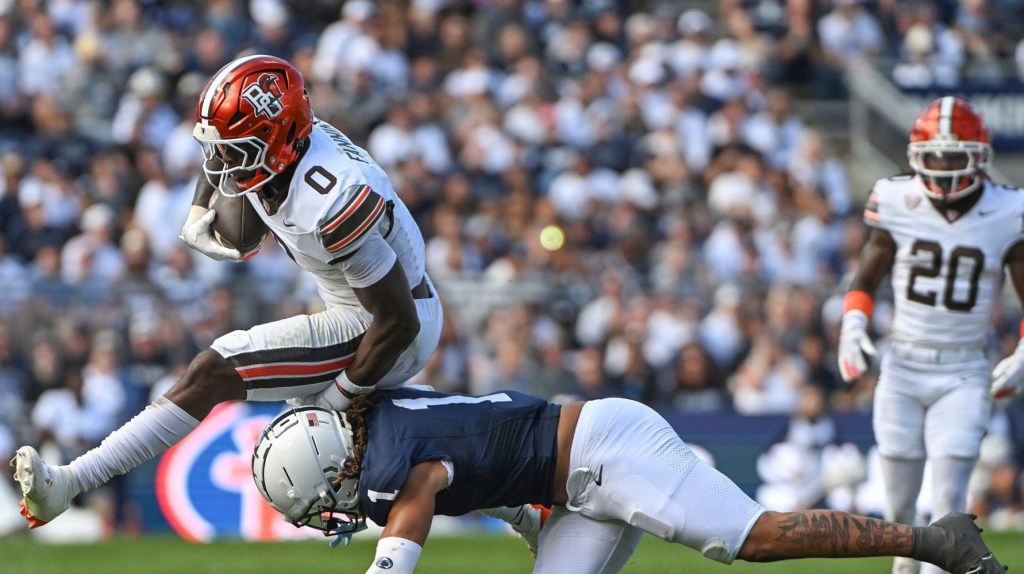
Harold Fannin Jr. (Bowling Green) TE Browns 

Fannin Jr., who was born in Canton, OH and went to school in state at Bowling Green, has all the makings of a hometown hero. The only player on this list who attended the same school for his entire college career, Fannin Jr. is a multi-level receiving threat at the tight end position whose versatility to line up in the backfield, as a traditional tight end, or in the slot will create mismatches. He is sure handed, having dropped only 2 of 171 balls thrown his way at BGSU, and is difficult to bring down once he gets the ball in his hands. He also had the best season ever statically for a TE in the FBS, breaking records forreceiving yards by a Tight End in a season (1,555) and most receptions by a Tight End in a season (117). Although I enjoyed watching him toy with MAC defenses on Tuesday and Wednesday nights, he also had huge outings against Texas A&M and Penn State, the latter of which had four defensive players taken in this year’s draft. His arrival gives Cleveland extra offensive weapon in and will provide depth behind starter David Njoku. Given Njoku’s history with injuries, we may even see Fannin Jr. make a few starts in 2025. 

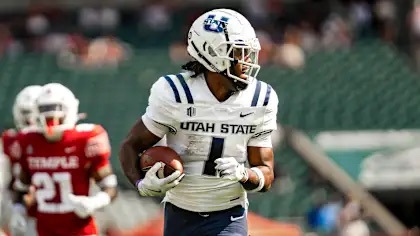
Jalen Royals (Utah State) WR Chiefs

This past fall, I had the privilege of watching Jalen play in person when Utah State came to Philly to play a game against my Temple Owls. Royals had 110 yards on 10 catches in the contest, one of which was a 26-yard touchdown on a wide receiver screen in which Royals flashed his 4.42 40 speed. A big play threat, he had 7 touchdowns of 50 yards or more in 2023and scored 15 Touchdowns total that season. Although limited a bit by injuries in 2024, he still netted over 800 receiving yards.Royals joins a receiving core that includes veteran Juju Smith-Schuster, Rashee Rice, Hollywood Brown, and Xavier Worthy. If he can stay healthy, look for Royals add another dimension toa Chiefs offense that was tied for 2nd to last in passing plays of over 40+ yards in 2024. 

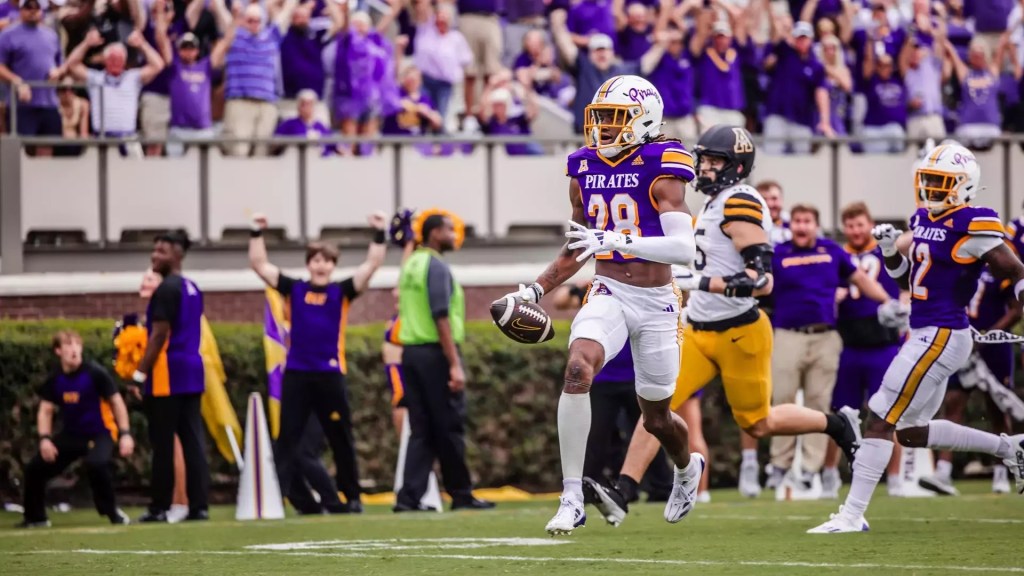
Shavon Revel (East Carolina) CB Cowboys

As an Eagles fan, it is not often I find myself cheering for anyone who has a star on their helmet. Shavon Revel is an exception. Revel went from playing JUCO ball to working at an Amazon warehouse where, in 2021 after an overnight shift, he attended an ECU prospect camp and ran a 4.4 40-yard dash. He was offered a scholarship to play for the Pirates on the spot.Physically, he compares with Richard Sherman, as they are similar in height, weight, and arm length. Revel plays a physical style of football – he isn’t afraid to stick his nose in the action when the ball is kept on the ground, and he disrupts the timing of receiver’s routes by using his length and physicality to jam receivers. Despite tearing his ACL in September 2024, Revel is expected to be fully healthy by week 1, and with Trevon Diggs expected to be sidelined for the first few weeks of the season, Revel will be a front runner for one of the starting CB spots.

Group of 5 teams if they were characters from “A Minecraft Movie”

As the sun was setting on another Sunday, I decided to see “A Minecraft Movie” to see what the buzz was about. The combination of social media being flooded with memes from this movie for a good month now and a lust for some childhood nostalgia beckoned me to my local AMC. In between laughing at many of the movies cliché one-liners, I couldn’t help but think of similarities I saw between Group of 5 teams and characters from the movie. I guess you could say the idea for this blog hit me like an enchanted diamond sword! 

Steve – Charlotte

Jack Black plays “Steve” – who is named after the default player name in Minecraft. In the movie we’re introduced to a young Steve who “yearned for the mines” but was discouraged from entering by a grumpy old miner. Steve grows up to live a comfortable, but boring lifestyle. One day after growing tired of his day to day, he decides to pursue his childhood dream by returning to the mines where he encounters the same grumpy old man, and manages to avoid him to enter the mines. He goes on to save the overworld by defeating the ruler of the Netherworld, Malgosha. 

Charlotte is the perfect embodiment of Steve. The program was started in the late 1940’s but existed for only three seasons before the team folded. With the help of the Charlotte 49er Football Initiative (CFI), the program was restored after more than sixty years in 2013. Just like Steve, Charlotte lost their dreams for so many years, only to find the fire and pursue them once more. Their mascot – Norm the Niner, also knows a thing or two about mining – you will never catch him without his pick-axe!

Garrett – Wyoming 

Garrett, played by Jason Momoa, is a tough guy has-been who is clad in a pink Western fringe jacket, and is the brawn of the protagonist group. He constantly mentions his ‘89 World Video Game Championship, even though nowadays he is a bit down on his luck; early in the movie he receives a foreclosure notice for his arcade. 

Wyoming University’s football team has not won a conference championship since 1993, and before that they won in 1989, which was the same year that Garrett won his championship. Upon seeing the Minecraft overworld for the first time, Garrett responds to Henry’s line of “We’re not in Idaho anymore” with“I think this is Wyoming.”  We can deduce that his association of the immense beauty of the Minecraft world with that of Wyoming’s makes the comparison to the State’s only FBS football program, along with the fact that both of them had some success decades ago which they are still hung up on, this was an easy conclusion to come to. 

Henry – Boise State

Henry’s story is one of redemption and fulfillment, just like Boise State’s. In the beginning of the movie, he is the new kid at school who, in an attempt to impress his classmates, builds a jetpack which ends up crashing into the towns most well known building. When he ventures into the mysterious dimension of Minecraft, he puts his smarts to use by building a fort that saves his sister and Dawn. He also crafts a unique weapon that is quite effective at warding off Pig Zombies when they invade. At the end of the movie, we see Henry fix his jetpack and fly it around school to the amazement of his peers. 

Just like Henry, Boise State was doubted, and time and time again the Broncos have proved critics wrong. Prior to their 2007 Fiesta Bowl upset against Oklahoma, they were 8-pointunderdogs despite finishing the regular season undefeated. Boise State also boasts a 12-5 record against power conference teams since 2000. The Broncos and Henry were both the new kids on the block at one point, but they earned their stripes, and proved to the world that they are among the best.

Western Kentucky’s Big Red is hands down the best mascot in collegiate sports

Every Saturday afternoon from late August to early December, hundreds of mascots take the field with their college football teams. Although every fan base adores their mascot, the truth is that there is there is one that stands head and shoulders over the rest. Or in this case, sits on a hill overlooking the rest. And its name is Big Red. 

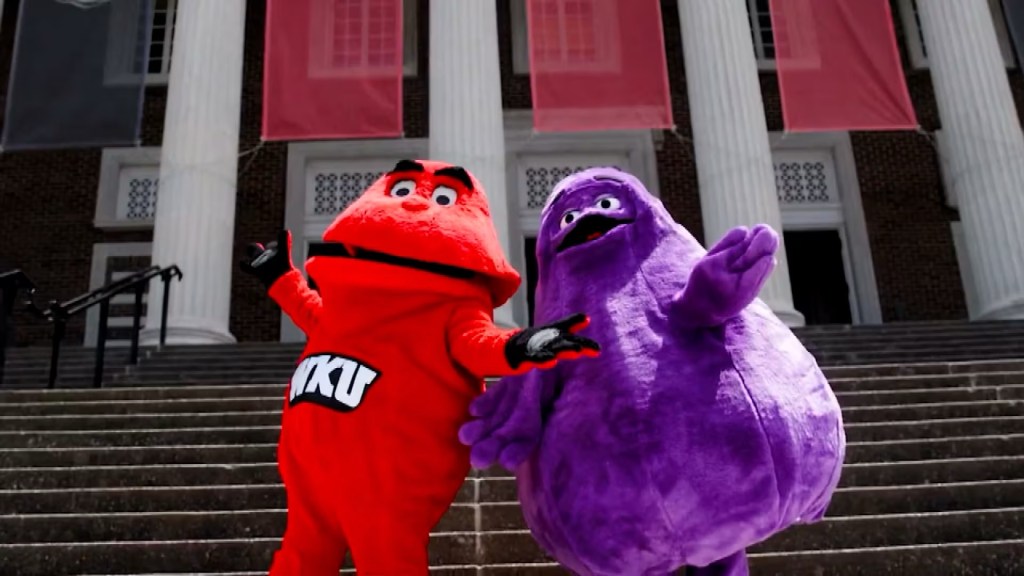
Since its humble beginnings in the rolling hills of southern Kentucky, Big Red has touched many in its relatively short existence. Big Red embodies WKU’s school spirit as well as the schools geographic setting, as it sits atop a hill. Mark Greer, the second person to portray Big Red, said this about the mascot: “It can make expressions where most mascots have one stupid expression on their face at all times. Big Red can show emotion like no other mascot.” It is the only FBS mascot inspired by a geographic feature. This lovable red blob’s physical attributes aren’t the only thing that distinguish it, because it has lore as deep as the Mariana Trench. 

In 2002, Western Kentucky filed a lawsuit against Mediaset, an Italian television company accused of copying Big Red’s mascot for one of its shows. The character that plagiarized Big Red, known as Gabibbo, debuted in 1990, which ironically was the year that Big Red was snubbed of the collegiate Mascot of the Year 1st place ranking. In 2012, Big Red became the first mascot inducted into the Capital One Mascot Challenge Hall of Fame. He is also friends with Grimace, something your mascot can’t say.

In a world of Knights, Bulldogs, and Wildcats, always be a Hilltopper. 

Questions facing each American Athletic Conference team as spring ball comes to a close

Spring football is in full swing, and while spring games may not be that appealing, the fact that they’re here means we are halfway through the offseason!  There is plenty to talk about in what has been a busy offseason in the American Athletic Conference. Since the departures of Cincinnati, Houston, SMU, and UCF, the playing field feels like it has evened a bit, and AAC newcomer Army proved that by winning the conference in 2024. 2025 is a new season though, and because the roster turnover bug spares no team, and the coaching carousel is always open, the conference’s top dogs will have to adjust to losing some of their key players and staff. Here are the biggest questions facing all 13 AAC teams as we approach the halfway point in the offseason.

Army

Who will replace Bryson Daily?

2024 was a historically successful season for the Black Knights. In their first year as a member of the American Athletic Conference, they won the conference championship, and for the first time in program history, they won 12 games. On the offensive side Bryson Daily was the catalyst for their success. He accounted for 32 touchdowns on the ground and rushed for over 1600 yards on almost 5.5 yards per carry. Unfortunately for Army, 2024 was Daily’s last year of eligibility.

Army coach Jeff Monken said rising senior Dewayne Coleman is No. 1 on the depth chart, but that there will be an open competition between the three returning QBs, Coleman, Cale Hellums and Ethan Washington. Coleman was Daily’s backup in 2024 and saw a bit of action. He is the only QB on the roster who has started a game, as he led the Black Knights to a win over rival Air Force in 2024 when Bryson Daily was injured. Regardless of who the starter is in 2025, he will need to step up big time if the Black Knights want to repeat as AAC champs.

Charlotte

Will the 49ers be able to put more pressure on opposing QBs?

Since Charlotte brought back its football program in 2015, it has only had one winning season. Luckily for 49ers fans, their new head coach knows a thing or two about winning. In his three years as Ohio’s head coach, Tim Albin took Ohio from a 3-9 record in his first season, to three consecutive ten-win seasons capped off by a MAC championship in 2024.

Perhaps their most glaring issue is their defensive line. In 2024 they ranked 13th of 14th in the American in sacks, and it didn’t help that they lost four edge rushers this offseason. Returning Edge rushers from 2024 Donovan Spellman and Zion Shockley will see plenty of snaps. Charlotte also added JUCO duo Jaylon Johnson and DJ Burgess to bolster the interior of their D-Line. Albin has said that he hopes to continue his success of rushing the passer that he had at Ohio over to Charlotte, and to be successful he will need to sure up his loose ends on defense, pun intended. Things will improve sooner rather than later if the 49ers are able to get more pressure on opposing QBs this season.

East Carolina

Will 2025 be a rebuilding year for the Pirates?

The 2024 season saw East Carolina finish with a respectable record of 8-5, thanks in large part to the emergence of QB Katin Houser, who took over for Jake Garcia after Garcia was benched during the Pirates game against Charlotte.

ECU shocked many by firing head coach Mike Houston mid-season in 2024, saying that “We have not seen the results we all want, and a change is needed to move the program forward.”Interim head coach Blake Harrell was named as the permanent head coach after leading the Pirates to a 4-0 start during his first few games.

The Pirates lost key offensive pieces in running back and 1K yard rusher Rahjai Harris, WR Anthony Smith, as well as three of five starters on the offensive line. On defense, they lost projected first round pick in Shavon Revel Jr. They also lost almost their entire starting defensive line to graduation.

However, the Pirates have brought in plenty of new blood from the portal – DE Kendrick DuJour (Sam Houston) and WR Jaquaize Pettaway from (Oklahoma) are two newcomers poised to make an immediate impact at positions of need. Whether or not 2025 will be a rebuilding year for the Pirates, or a year in which they make a run at the AAC title, will depend largely on how well the new faces and the “OG’s” of the team cohere.

Florida Atlantic

Can the Owls passing offense take a step forward?

In 2024 under Tom Herman, Florida Atlantic ranked 11th out of 13 in the conference in passing yards and 12th of 13 in passing touchdowns. Herman was fired mid-season, following a string of disappointing seasons. The combination of lack of consistency at QB, a WR corps that lacked depth and size, as well as bad coaching can be attributed to their lack of success. Over the offseason, the Owls lost QB Cam Fancher to the portal, who started the first nine games of the season before missing the final three due to injury. But they may have found a worthy successor in C-USA 2024 player of the year Caden Veltcamp. The receiving corps will be spearheaded by Veltcamps right hand man at Western Kentucky – receiver Easton Messer – who will be joining Veltcamp at FAU for the 2025 season. Omari Hayes, who went from the scout team in 2023 to being FAU’s leading receiver in 2024, will be back in 2025. Owls also scored a pair of three-star receiver recruits that will give them some size, Jade Card and Mykel Calixte are both over 6-foot-2.5. New FAU new head coach Zach Kittery will be bringing his pass heavy philosophy with him from his time as offensive coordinator at Texas Tech. This offense has the pieces to improve on it’s 2024 performance, whether or not it actually improves will be something to watch out for.

Memphis

What will this offense look like sans Seth Hennigan?

For the past 4 seasons, Memphis had their guy at QB in Seth Hennigan. Hennigan led the Tigers to a 34-16 record in his time in the Bluff City, setting numerous school records along the way.  

The Tigers landed former Nevada QB Brandon Lewis through the portal this offseason, along with the 11th ranked QB in the 2025 recruiting class in A.J Hill. Although Lewis has starting experience at the college level, Hill has already impressed offensive coordinator Tim Cramsey in his short time on campus.

Although the Tigers were senior heavy at other skill positions on offense in 2024, they went out and found replacements in the portal, namely receivers C.J. Smith and Jadon Thompson. Rising Sophomore receiver Brady Kluse showed flashes of potential as a freshman and could be a big contributor to this offense as well. 1st team all AAC RB R.J Anderson Jr. will not be returning in 2025, but the Tigers snagged Ole Miss transfer Rashad Amos in the portal, who is the prime candidate to replace Anderson Jr. Before playing one season at Ole Miss in 2024 where he didn’t see much action, he rushed for over 1000 yards in 2023 while playing for Miami (OH). 2025 will be a year of transition for this Tigers offense, whether they will take a step back or forward remains to be seen.

Navy

What is the Midshipman’s ceiling?

Brian Newberry’s second season in Annapolis was quite successful – he led the Midshipmen to their first winning season since 2019, which was capped off by a bowl victory over Oklahoma. QB Blake Horvath and RB Eli Heidenreich led the Midshipmen’s formable triple option attack in 2024 and both players will return in 2025 to finish what they started. In total, over a dozen starters from both sides of the ball will be back in ’25.

They play a hard-nosed, smart brand of football. Navy was one of the least penalized teams in the nation, had a top ten turnover ratio, and ran teams into the ground with their physical triple option offense. Outside of their loss to eventual national runner up Notre Dame, a shutout at the hands of AAC runner up Tulane when Horvath was injured, and a bizarre loss to Rice when Horvath turned the ball over thrice, Navy played lights out in 2024.

In my eyes, this is a team that can win the American, as Navy retained most of their core, while others in the AAC experienced a lot of roster turnover. If the cards fall their way, they can make a legitimate push at the college football playoff in 2025.

North Texas

Can the defense pull their weight this season?

If I told you there was a team that averaged 488.8 yards per game offensively, 3rd in the nation, and ranked 23rd in the nation in scoring offense, what do you think their record would be? 9-3? 10-2?

The team behind those numbers is North Texas, and they finished the season 6-7.

The Mean Green gave up over 34 points and 460 yards per game on Average, which put them near the bottom of the American.

The Mean Green took their first step towards fixing their defensive woes by hiring former Sam Houston State DC Skyler Cassity, who guided the Bearkats to the 20th-ranked defense in FBS at the end of the regular season in 2024.

Personnel wise, they bring back a few key contributors from the 2024 season in safety Evan Jackson, middle Linebacker Chavez Brown, and corner Brian Nelson. Key portal acquisitions include D-lineman Richard Outland Jr. and corner David Fisher, both transfers from Cassitys former school Sam Houston State, and safety Will Jones II from Old Dominion.

Cassity was able to turn things around quickly at Sam Houston, will he be able to do the same in Denton?

Rice

Can the Owls find a spark on offense under new tutelage?

Just a few hours south of Denton are the Rice Owls, and they have the exact opposite problem that North Texas does.

In 2024, Rice had the 13th ranked scoring offense in the AAC out of 14 teams, averaging only 22.2 points a game, and had the worst red zone offense in the conference.

Rice also needs to cut down on turnovers. In 11 starts, (former) Rice QB E.J. Warner threw a conference high 13 interceptions, and as a team, the Owls had a turnover margin of -10, which was tied for 2nd to last in the AAC.

E.J Warner took his talents to Fresno State this offseason, which left Rice without a clear QB1. AJ Padgett has the most out experience of everyone in that QB room but was benched in Rice’s 2023 bowl game after throwing three picks. We may not know who the starter is until the end of fall camp.

The Owls will have new leadership in 2025, with offensive coordinator Vince Munch and Head Coach Scott Abel coaching their first seasons at Rice after working together to turn FCS Davidson’s program around in a historic way. Although they may have run a successful offense in the Pioneer league, it remains to be seen if they will fare as well in the American.

Temple

Will the run game finally come alive?

2024 was a bad year all around for Temple. Their run game was especially bad, and it limited the Owls on offense. Although Head Coach Stan Drayton was fired with two games left in the 2024 season, the Owls rushing problems will not be magically solved with his departure. Temple ranked dead last in the AAC in multiple categories on offense, including scoring offense and rushing yards. They were also last in yards per rushing attempt with 2.88, which was 4th worst in the entire FBS out of 134 teams.

Rising Senior running back Terrez Worthy tested the transfer portal, before ultimately deciding to return to the Owls. Temple also added back Jay Ducker, who has a 1,000-yard season under his belt at the FBS level. Although the blame for Temple’s horrendous run game can be placed partially on Stan Drayton’s play calling, the offensive line was also lackluster. The Owls allowed 37 sacks in 2024, which was the most in the AAC. New head coach KC Keeler and offensive coordinator Tyler Walker will certainly have their work cut out for them when it comes to turning this running attack around.

Tulane

Who will replace Hughes and Mensah?

Jon Sumrall’s first season as Tulane’s Head Coach ended in two consecutive losses, one in the AAC title game to Army, and the other at the hands of the Florida Gators in the Gasparilla bowl. Following the season, the Green Wave suffered two more losses, something that hurt even more than the ones they suffered on the field. QB Darien Mensah and RB Makhi Hughes, who were central to the success of Tulane’s 16th best scoring offense in the country, both hit the portal.

At running back, rising Junior Arnold “Duda” Barnes could be the Green Wave’s next RB1, and his tape shows shades of Hughes North-South running style. Tulane also brought in a handful of solid talent at the RB position through the portal.

The quarterback room has a lot more experience than it did at this time last year, albeit with different faces. Journeyman dual threat T.J Finely arrives in what New Orleans for what will likely be the last stop in his college football journey after playing for four different FBS teams. Finley most notably led Texas State to their first ever bowl game in 2023, throwing for 3,439 yards and 24 touchdowns with a completion percentage of nearly 70%. Then there’s Kadin Semonza – a rising Sophomore transfer from Ball State, who was a bright spot in what was a forgettable 2024 season for the Cardinals. Whoever the starter ends up being has big shoes to fill if they want to get back to the AAC title game.

Tulsa

How can the defense get better?

The Golden Hurricane gave up 42.5 points a game in 2024, the 2nd most in FBS. Only hapless Kent State gave up more. Tulsa will have an all new coaching staff in 2025, which includes defensive coordinator Josh Reardon, who will be tasked with turning around a unit that was one of the worst in the nation in 2024. Reardon coached at East Tennessee State alongside new Tulsa HC Tre Lamb for one season before leaving for Tulsa. Before his time at ETSU, Reardon was the DC at Gardner-Webb, where in his final season (2023) he coached 5 players to first team all-conference honors.

Lamb and Reardon brought standout linebacker Ray Coney with them from ETSU, who led the Buccaneers in tackles in 2024 and recorded 5 sacks. Portal acquisitions J’Dan Burnett (Louisiana Tech) and Nahki Johnson (Pitt) will help sure up the defensive line. Despite returning a few of their key starters on top of the transfers, Tulsa still lacks depth and talent on defense, and must try and snag a few more players once the spring portal opens up. This unit should improve in 2025, but allowing less than 42 points a game seems like low hanging fruit.

UAB

Can Trent Dilfer coach himself off the hot seat?

Since taking over as Head Coach in 2023, former Super Bowl winning Quarterback Trent Dilfer has led the UAB Blazers to a 7-17 record. Dilfer’s only coaching experience prior taking the job at UAB was at Lipscomb Academy in Nashville, TN, where he was head coach for four seasons.

Trying to get top talent to play at UAB is already difficult given they are in the heart of SEC country, so I can empathize with Dilfer there. But on the field, it’s easy to see that the Blazers are not a well-coached football team. Dilfer has said his program needs to do a better job of mastering the little things it takes to be successful, and I agree. For starters, UAB averaged 73 penalty yards per game, which was 5th worst in the country.  

Dilfer’s sentiment about mastering the little things was personified in their loss to Charlotte. Down 2 points late in the 4th quarter, deep in Charlotte territory, UAB had a chance to finish the season with a win by kicking what should have been a chip-shot field goal. The first attempt from 35 yards out was missed, but nullified after a 49ers Personal Foul which made the second attempt a 27 yarder, and that was also missed.

UAB also let their November 2024 contest against UConn slip away from them after leading 20-3 at the half. Despite forcing two turnovers, the Blazers turned the ball over four times, ultimately losing 31-23. Like Dilfer said, the little things are killing his team, and that starts up top. I wouldn’t be shocked to see him fired mid-season if he can’t clean things up.

USF

How Bullish is USF’s outlook if Byrum Brown can stay healthy?

The Bulls had themselves a decent year in 2024 after being projected 13th in the conference pre-season polls. Despite losing starting QB Byrum Brown after only four games, they finished the regular season bowl eligible and went on to win the Hawaii Bowl against San Jose State. When Brown played a complete season for USF in 2023, the Bulls had one of the more dynamic offenses in the AAC, averaging 31.9 points per game. Brown’s dual threat talents fit perfectly into USF’s spread option scheme and kept defenses honest. According to his teammate and fellow QB Bryce Archie, Brown looks “looks 10 times better.”  USF has the same coaching staff from Brown’s 2023 breakout season back for their 3rd year in Tampa. If Brown can stay healthy and gets a little help from his defense, USF could go from being a dark horse to win the AAC to a favorite.

UTSA

Can the Roadrunners defense limit big plays through the air?

UTSA, like their Lone Star state AAC conference counterpart North Texas, was great on offense but porous on defense last season. The difference was that the Roadrunners, despite allowing 85 yards fewer per game than the Mean Green, and having one of the better red zone defenses in the conference, could not stop the big play for the life of them. UTSA was in the top 5 in the nation in most passing plays allowed of 20, 30, 40, and 50 or more yards. Opposing offenses averaged 4.3 plays of 20+ yards through the air per game against UTSA, despite UTSA averaging over 3 sacks a game. With that being considered, their secondary deserves a big portion of the blame, but it can also be put back on the coaching staff.

Tulsa’s Kamdyn Benjamin’s 74 Yd touchdown catch and run in the 3rd quarter of Tulsa’s 28 point comeback victory against UTSA could have easily been stopped after just 15 yards, but the secondary took horrible angles to the ball carrier which resulted in a score.

In UTSA’s last second defeat at the hands of Rice, Roadrunners defensive back Ken Robinson committed a critical pass interference penalty after being beat on a double move with no help over the top. That set up Rice in the red zone, where they would ultimately score the go-ahead touchdown.

UTSA was also the 3rd most penalized team in the nation last year, averaging almost 9 penalties per game. Defensive coordinator Jess Loepp needs his unit to improve in 2025 or he may be on the way out in San Antonio.
The Philadelphia Eagles having been robbing Temple Football for decades – here’s why Temple Football needs a “cherry new deal” with the Eagles to play at the Linc so they can stay afloat

When you think of popular Philadelphia sports teams, who comes to mind? The reigning Super Bowl champion Philadelphia Eagles? The Phillies? The 76ers? Heck, what about the Villanova Wildcats men’s basketball team. And isn’t Penn State close to Philly anyway?

I bet you did not think about the “other” football team that plays at Lincoln Financial Field, the Temple University Owls. I love the Eagles as much as the next guy. But their greedy ownership not only does not care about the success of their roommate, who just so happens to be one of the largest employers in the city of Philadelphia, they want to keep Temple football in the cellar.

That’s right ladies and gentlemen. Your beloved Philadelphia Eagles are the bad guys. But not like the funny ones who thew snow balls at Santa or the drunken ones who heckle Cowboys fans at the tailgate. They are bona fide criminals who have gotten away with swindling Temple University out of tens of millions of dollars over the past two decades. The motto popularized by Eagles legend Jason Kelce of “No one likes us, we don’t care,” refers to the bad rap that the Eagles and their fans get around the NFL. Unfortunately, Temples own city, for which they provide hundreds of millions of dollars in tax revenue per year, doesn’t like them, and care as Temple might, they seem to keep getting screwed over regardless. 

I’m not saying that Temple would have Alabama level success if they didn’t have to shell out all this cash to the Eagles, but their football team, and their athletics as a whole would be in a better spot.

When Temple cut seven sports programs in 2013 to shave $3M off their athletic budget, many were quick to criticize them. Why would they sacrifice all these sports for a team that wins two games a year? Well, if the Eagles didn’t charge the city’s only public university out the ass to play a few football games there per year it wouldn’t have gotten to that point.

Temple, like many other universities, understands that a strong football program can be a beneficial asset to their school. It means more exposure for the university. That’s part of the reason why their board voted to keep the football program in a 2005 meeting. Temples footballs historical run of success in the 2010s proved that under competent leadership, the program can be successful. 

But surely the Eagles outrageously high rent for Temple must be justifiable right? There has to be a catch. Wrong. Francis Bacon once said, “Opportunity makes a thief,” and the Eagles have a great opportunity to extort Temple through their deal with the city of Philadelphia made when constructing the Linc.

Lincoln Financial field was completed in 2003 with a total cost of $518.0M. $330M of the funding was private, and $188M (36%) of the funding was from the city of Philadelphia and the State of Pennsylvania. The Eagles also receive a stadium operating subsidy, which is not included in the public funding contribution, and do not actually own the stadium, they lease the land from the city. The Eagles sublease the stadium to Temple, which gives them negotiating power, a power which they have abused terribly. Temple also gives parking revenue to the Eagles, and keeps only 10% of concession revenue from their football games, with the rest going to big brother. Although Temple paid just under $1M to play at the Linc in 2023 compared the over $4.5M they paid in 2022, they paid $3M in 2024, and will pay $4.5M in 2025. 

While Temple football is struggling to break even, the Eagles are swimming in cash. As of the 2024 season, the Eagles were valued at $6.6B, the 8th most valuable franchise in the NFL. Thanks to financial records released by the publicly owned Green Bay Packers following the COVID affected 2020 season, we know NFL teams are profitable without even selling tickets, parking spots, and concessions.

So, what, if anything, can be done about Temple’s predicament? And who should be held accountable?

Although the Philadelphia Eagles ownership are the ones who should rightfully shoulder most of the blame and ultimately decide how much they charge Temple, an effort can, and must be made by Temple’s administration to re-negotiate this contract. New university president John Fry claims he is committed to keeping the football program following rumors this past fall that the program would be cut. He needs to put his money where his mouth is by getting to work on a new deal. Though not the fault of the current administration, previous Temple leadership made decisions that took the program in a direction that placed them in their current predicament.

Once upon a time, the Temple Owls had their own football stadium, named Temple Stadium. It opened in 1928 at Mount Pleasant Avenue and Michener Street in North Philadelphia and had a capacity of 30,000 fans. It served as the proud home of the Owls for a half century before Temple moved to Veterans stadium due their own stadium falling into a state of disrepair. Temple Stadium was demolished in 1997, and the university sold the 32-acre property to Enon Tabernacle Baptist Church for $4.5M, which is the same price Temple will pay just to play the 2025 season at the Linc. Although the programs outlook seemed bleak at the time the property was sold, in hindsight it was a rash decision as finding real estate in North Philly to build a 35,000-seat football stadium without displacing homes or businesses is impossible. This was proved by Temples failed attempt around a decade ago to build a stadium in the Northwestern corner of their campus. The administration owes it to the program to at least try to renegotiate this deal. 

So, what leverage does Temple have?

They are the largest college in Philadelphia, the 6th largest employer in the city of Philadelphia, and they support over 40,000 jobs statewide. Temple also generates $200M+ in tax revenue annually for the state of Pennsylvania. By cutting down this deal to under $1M a year, Temple athletics would have an extra $3.5M per year to spend. In the short term, they could re-invest the money saved into their bread and butter: the football program (NIL deals, facility upgrades, etc.) to get fans back into the seats. More fans in the seats would be beneficial to the local economy, it would generate more revenue through taxes paid as a part of the ticket purchases, more memorabilia and food would purchased at stadium, more folks would go out to Xfinity live after the game is over, etc. Once the football programs success becomes more sustained and revenue increases, they can use the funds saved as a part of the new deal to bring back sports that were cut in 2013.

Despite all that, Temple is still going to have a tough time convincing the Eagles to give them a discount. After all, we’re talking about a franchise that sold cups of snow from their playoff game against the Los Angeles Rams for $50 each for crying out loud. Temple needs bring in to perspective the relationship between fellow Keystone State college Pitt’s relationship with the Steelers. Pitt and the Steelers share Acrisure stadium, which was funded similarly to Lincoln Financial field. Pitt and the Steelers each paid a large sum up front when they signed the lease for the stadium, and Pitt now only pays a portion of their ticket sales to the Steelers, nothing more. Although the portion of the sum that Pitt paid was not made public, we can assume that the Steelers probably paid for most of it, being the larger entity. Temple has paid at least $27M to the Eagles since they began playing at the Linc in 2003, not including parking or concessions.

The Owls took a good step forward in fixing up their program by hiring legendary coach K.C. Keeler following the end of the 2024 season to replace a glorified running backs coach who was a nepo hire – Stan Drayton. Drayton’s rushing offense was consistently one of the worst in the country, ironically enough.

In the short term, improvement on the field will give Temple a little bit of leverage in the push to re-negotiate. But they already have all the tools they need to get a deal done, and it’s up to Temple’s administration to convince the Eagles and the city of Philadelphia that while lowering Temples rent is ethically the bare minimum, it is also an investment in the city’s economy. 

It’s time to change the college football playoff format again – but not in the way you might think

Since college football changed how it crowned its champions from one game played between two arbitrarily selected teams, to a four-team playoff in 2014, teams and fans alike have pushed for an expanded playoff field. And in 2024-25, those who wanted the larger field were granted their wish. But despite the expanded field this past season, there was still plenty of controversy surrounding the selection of teams. SEC schools like Ole Miss and Alabama pleaded their cases in vain to the committee over SMU and Indiana, who to the disdain of many, ultimately earned berths over the aforementioned SEC hopefuls. While I think the committee made the right picks, the product said teams put out of the field was not exactly entertaining. That’s why its time to shake up the college football playoff format yet again, but we’ll be expanding it, not shrinking it.

In thermodynamics, the law of entropy dictates that things naturally tend to become more disorderly over time. Such is also the case when it comes to college football conference realignment.

What started out as a trickle in the early 2010s with programs like Mizzou and Texas A&M jumping ship from the Big 12 to the SEC has turned into a full-on flood. In 2024 alone, we saw blue-bloods Texas & Oklahoma leave the Big 12 for the SEC, and Oregon, UCLA, USC and Washington leave the PAC-12 for the Big 10. This has caused a chain reaction of conferences to poach schools from each other all throughout college football. If G6 programs were fighting an uphill battle just to sniff the playoff before, they need to climb K2 now. This is all the more the reason why we need a bigger playoff format. 

Critics of the selection of this past years playoff teams argue that SMU and Indiana should not have made the playoff just because of their record alone, and that Ole Miss and Alabama, despite having three regular season losses, deserved a playoff berth more due to a tougher strength of schedule. The plight of Bama and Ole Miss can be partially chalked up to the new superconference that they are a part of. Critics argue that if SMU or Indiana had played an SEC strength of schedule, their record would have more blemishes. A counter argument to that is those teams could schedule non-conference opponents to bolster their strength of schedule. In 2024, Tennessee’s non-conferenceschedule consisted of  FCS Chattanooga, Kent State (who went on to be winless), NC State, and UTEP (non P4), while Ole Miss’s was Furman (FCS), Middle Tennessee (non P4), Wake Forest and Georgia Southern. Furthermore, although Indiana’sschedule was one of the weakest in the Big 10, they still won eleven games against the teams put against them in one of the toughest conferences, and if I am the committee, given the format, I have no choice but to respect that. 

There are valid cases on both sides, but a new playoff format would eliminate the need for such arguments by being more inclusive of fringe P4 schools while giving the Davids of college football a chance in a world of Goliaths. It would also provide a more level playing field for said fringe teams by not immediately pitting them against college footballs powerhouses, thus creating more exciting matchups.

The football championship subdivision (FCS) has already given us the perfect blueprint for what the playoff should look like, but we can make it better. In the FCS, twenty-four teams make the playoffs. Eight teams receive a first-round bye, and the higher seed hosts every game until the championship, which is played at a neutral site. Although home field advantage is important no matter where you play, playing at a stadium with a capacity of 20,000 versus 100,000 clad in white in Happy Valley is not the same. So, that’s where I would make my first change. Anything after the first round should be played at a neutral site. Although some teams should still be rewarded with a bye, I would limit home field advantage to the play in round, which brings me to my next point.

In my new format for the FBS playoff there would be a total of six rounds. My pitch: Each winner of the Power 4 conferences (ACC, SEC, Big 10, Big XII) get an automatic berth and a byeto the 3rd round. Then, the next highest ranked P4 teams to not win their conference earn a bye to the 3rd round. The next twelve berths would be at large. Six bids would also go to the highest ranked G6 conference winners, who would earn a bye to the second round. The final two bids would be decided by play-in games similar to the First Four in March Madness, this would be between the four lowest seeds as determined by the committee. 

In this scenario, there are no losers. What separates this format from the newest iteration isn’t just the number of teams playing. Fans get what they want by seeing fringe teams pitted against one another, putting to bed any arguments on who should have made it, while weeding out obvious mismatches. The reason why teams shouldn’t have home field advantage past the first round is because this isn’t the NFL where all teams are on the same level in terms of resources, college football is the complete opposite. Teams should not be awarded home field advantage essentially because they have more money than another school, which, like it or not, is how it works. Finally, more games means more revenue for everyone involved.